
Introduction
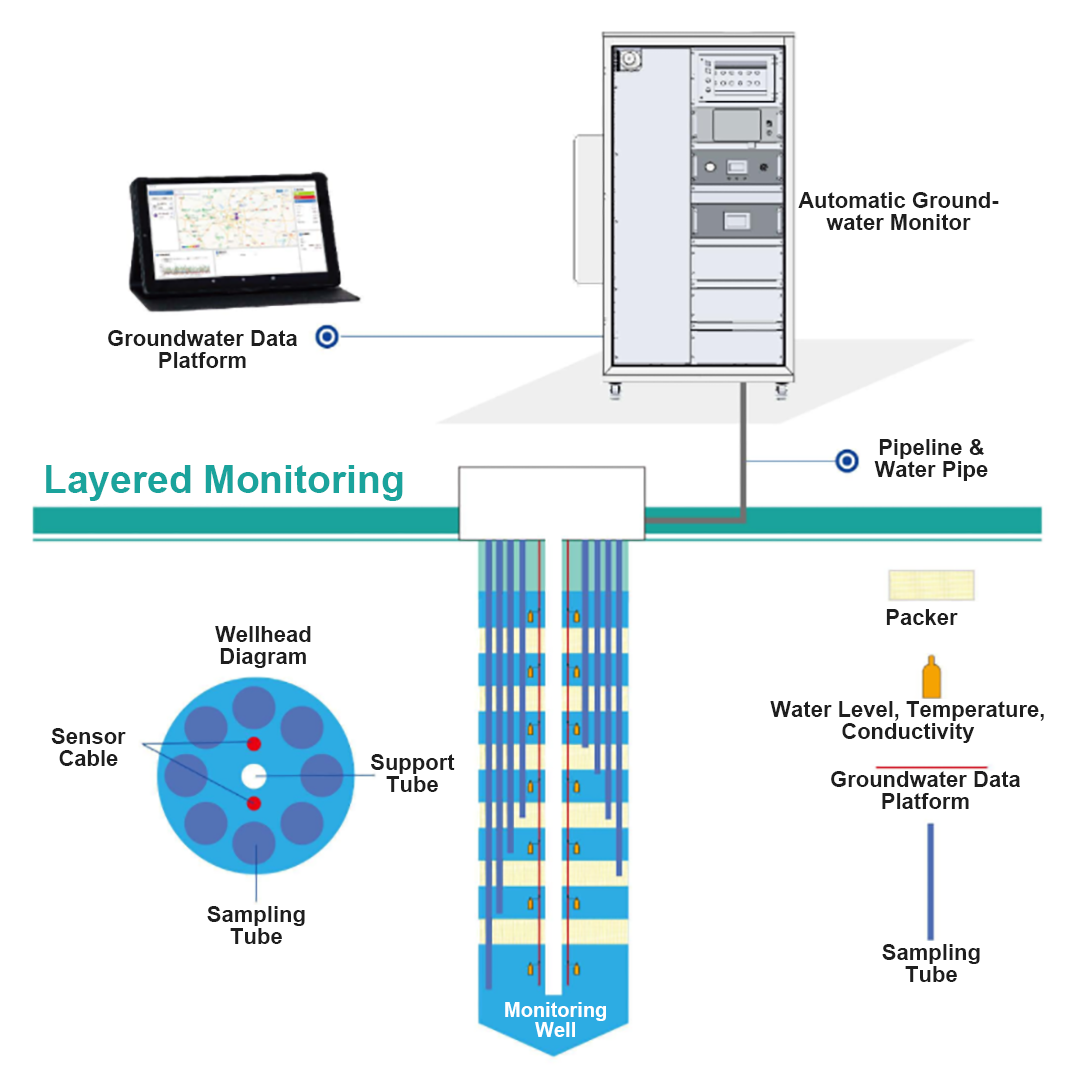
The groundwater automatic monitor is an integrated intelligent device dedicated to long-term, real-time, and unattended monitoring of groundwater environmental parameters. It is widely applied in hydrogeological surveys, environmental protection supervision, water resource management and other fields.
● The probe is made of 316 series stainless steel, featuring excellent corrosion resistance and durability, suitable for various harsh underground water environments. It integrates multiple sensors to simultaneously detect key parameters such as groundwater level, temperature, conductivity, pH value, and turbidity. The probe has a compact design with customized size to adapt to different well diameters.
Data Acquisition & Transmission Unit
● This unit is the "brain" of the monitor. It collects data from the sensing probe at a configurable frequency (e.g., once every 10 minutes to 24 hours) and processes the raw data to ensure accuracy. Equipped with multiple communication modes (4G/5G, LoRa, NB-IoT, RS485), it transmits the processed data to the cloud monitoring platform in real time. It supports dual power supply of AC220V or DC24V to ensure stable operation in both on-grid and off-grid scenarios (e.g., remote mountainous areas with solar energy supplementary power supply).
Transmission Cable Assembly
● The connecting cable between the probe and the acquisition unit has an outer diameter of 0.8cm and a customizable length ranging from 30m to 500m, meeting the deployment needs of different well depths. The cable sheath is made of polyurethane material that complies with green environmental protection standards, with strong wear resistance, tensile resistance, and waterproof performance, effectively isolating underground corrosive media.
Cloud Monitoring Platform
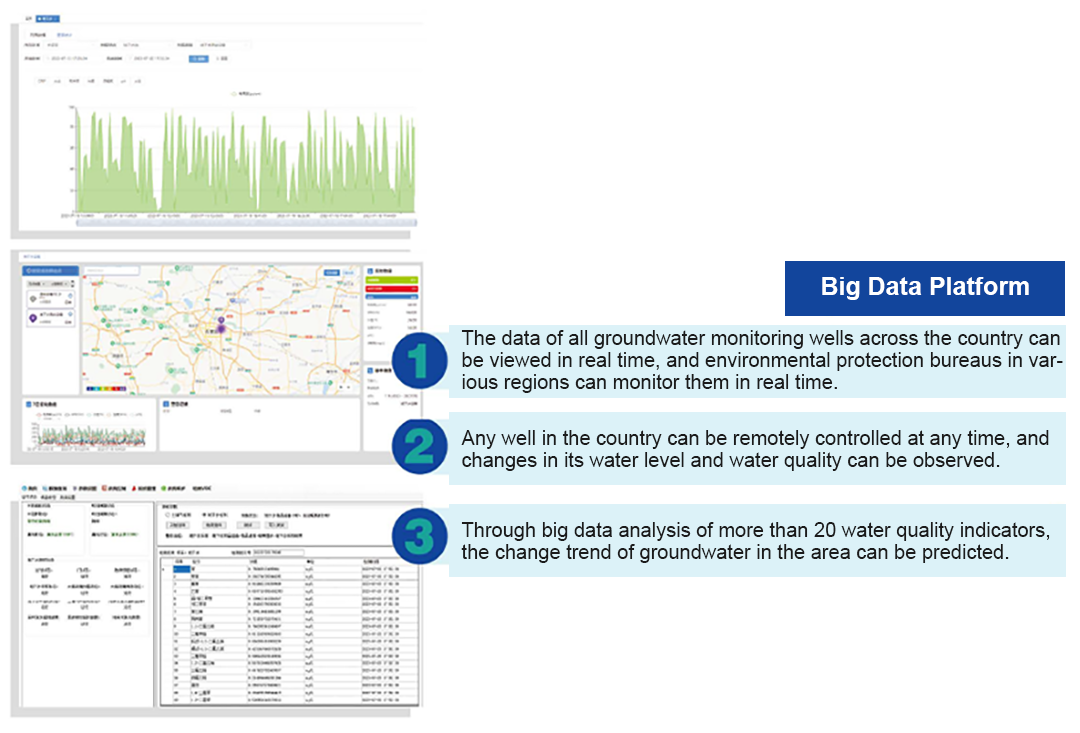
● The platform realizes centralized management of monitoring data of all wells nationwide. It supports functions such as real-time data display, historical data storage, trend analysis, and abnormal alarm. Environmental protection departments and water conservancy authorities can remotely access the platform to view the water level and water quality changes of any monitoring well at any time, and can also perform remote control operations on the monitor (e.g., adjusting data collection frequency, calibrating sensors).







.png)
.png)