
Product Introduction
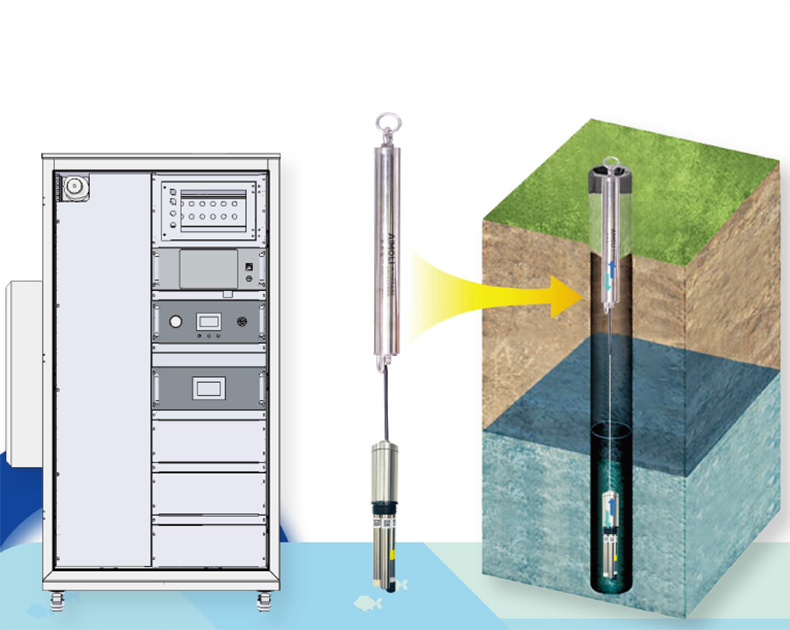
● The multi-parameter groundwater analyzer is a professional monitoring device designed for scenarios such as groundwater environmental monitoring, water conservancy and hydrological surveys, and geological prospecting. It is used to obtain key groundwater quality and environmental parameters in real-time and accurately. It can realize integrated collection, analysis, and data feedback of core groundwater indicators, providing high-frequency and high-quality basic data support for groundwater resource assessment, pollution prevention and control, and ecological protection. It is widely applied in fields such as groundwater environmental quality monitoring by environmental protection departments, groundwater resource management by water conservancy systems, geological engineering prospecting, and groundwater-related research by scientific research institutions.
● The core function of the instrument revolves around synchronous determination of multiple parameters. It can collect six key parameters in real-time: dissolved oxygen (DO), electrical conductivity, turbidity, pH value, oxidation-reduction potential (ORP), and water temperature, covering the core indicators of the physical and chemical properties of groundwater. Among them, dissolved oxygen reflects the aerobic environment status of groundwater; electrical conductivity indicates the ion concentration in the water; turbidity characterizes the content of suspended particles in the water; pH value indicates the acidity or alkalinity of the water; oxidation-reduction potential reflects the redox capacity of the water; and water temperature is a basic environmental factor that affects the stability of other parameters. Additionally, the instrument is suitable for well-flushing operations in groundwater monitoring wells. During the well-flushing process, it can automatically determine whether the well-flushing meets the monitoring requirements according to preset standards (such as parameter fluctuation thresholds and water quality compliance indicators). When the well-flushing meets the standards and the termination conditions are satisfied, it will automatically trigger an acousto-optic prompt or a pop-up prompt on the data terminal, avoiding errors from manual judgment and ensuring the accuracy and validity of subsequent water quality monitoring data.
● In terms of operation and adaptability, the instrument is designed to meet the needs of field and on-site monitoring, supporting convenient on-site deployment. It is compatible with groundwater monitoring well pipes and online data transmission modules. Some models are equipped with data storage functions (capable of locally storing historical monitoring data) and remote transmission capabilities (such as real-time data upload to monitoring platforms via wireless communication methods like 4G and LoRa), facilitating users to remotely view and trace data. In terms of installation and maintenance, it adopts a modular design, allowing sensor components to be calibrated or replaced individually, reducing maintenance difficulty and costs. Meanwhile, it adapts to the monitoring needs of groundwater at different depths and can be adapted to different well depths via cables (with a common adaptation range from several meters to hundreds of meters).







.png)
.png)